
Troubleshooting Journeys:
Aligning Product Teams on a Troubleshooting Strategy
- 7%fewer open support cases
- Next ’23keynote feature
- 11playbooks shipped
Disclaimer
The following case study is personal and does not necessarily represent Google’s positions, strategies or opinions. I have omitted and obfuscated confidential information.
Summary
Overview
In early 2023, a UX researcher and I built a Jobs to be Done (JTBD) framework for Google Cloud Observability. It gave the whole product team a shared, research-backed view of what users actually need.
The problem
Observability had caught up with the market on core features. The next step was standing out, but the team didn’t have a shared, user-centered way to decide where to focus.
What I did
I partnered with a UX researcher to build the framework, then designed and ran the workshops that made troubleshooting the team’s strategic focus. From there, I led the strategy for Interactive Playbooks, built on the Universal Dashboard Framework.
Impact
Interactive Playbooks were featured in the Google Cloud Next ’23 keynote, and open support cases dropped 7%.
Who I brought togetherA UX researcher, then product, engineering and UX across Observability, and later the GKE team and Technical Support Engineers. A shared framework turned a debate about features into agreement on one focus: troubleshooting.
The Challenge
By 2023, Cloud Observability matched the core capabilities of most tools on the market. With the basics covered, we needed to figure out how to stand out.
I saw a chance to anchor that decision in what users need.
Creating the Framework
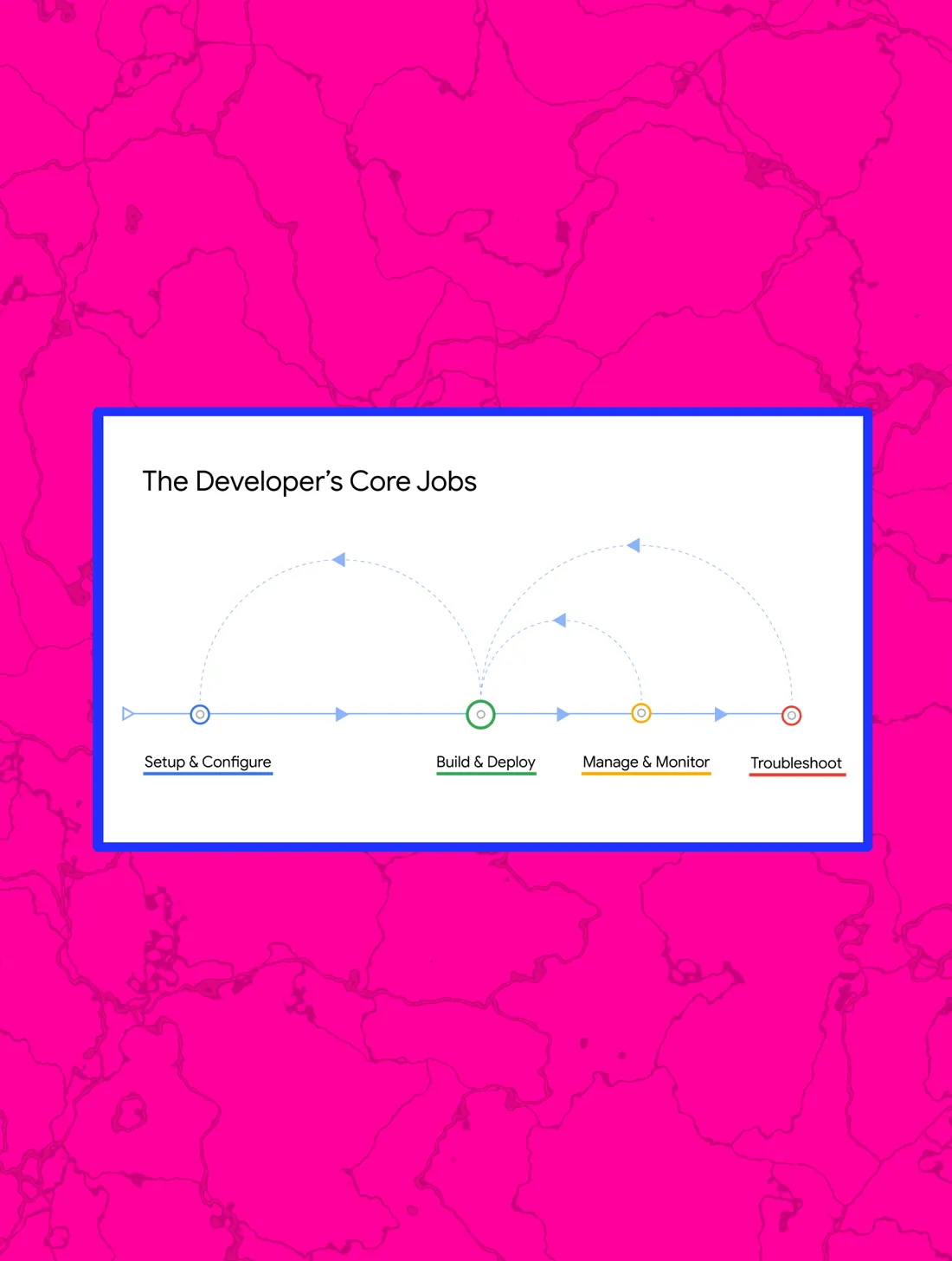
JTBD helps a team agree on the right problems before jumping to solutions. My research partner ran hours of interviews and dozens of diary studies with our two main personas. One had four core jobs and the other had five. The four they shared became the backbone of the framework.
I turned the findings into simple diagrams and one-pagers the whole team could follow and share.
Bringing the Team Along
We held sharing sessions with product, engineering and UX. In March 2023, I ran a cross-functional workshop built around the framework to set our focus for 2023 and 2024.
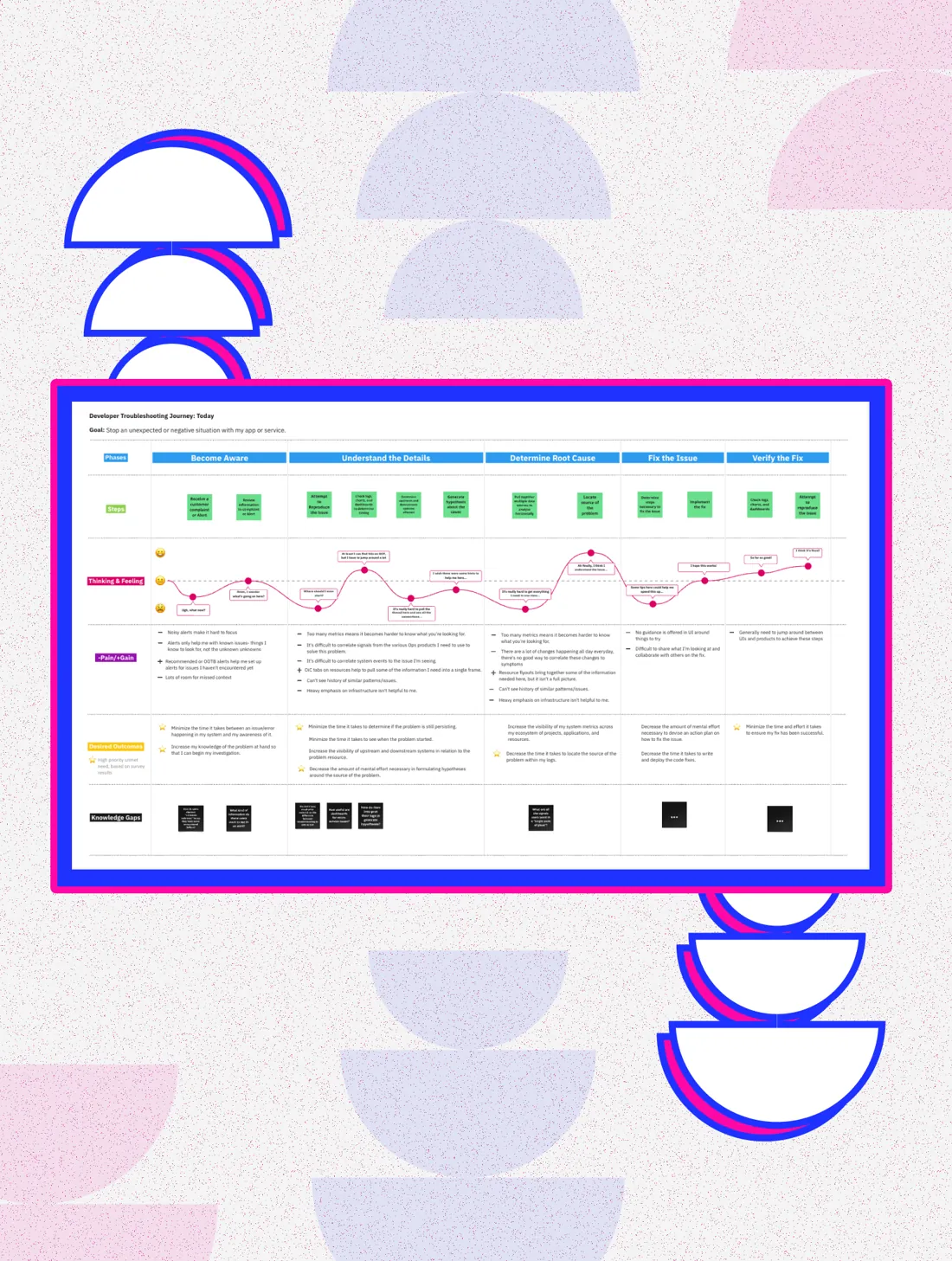
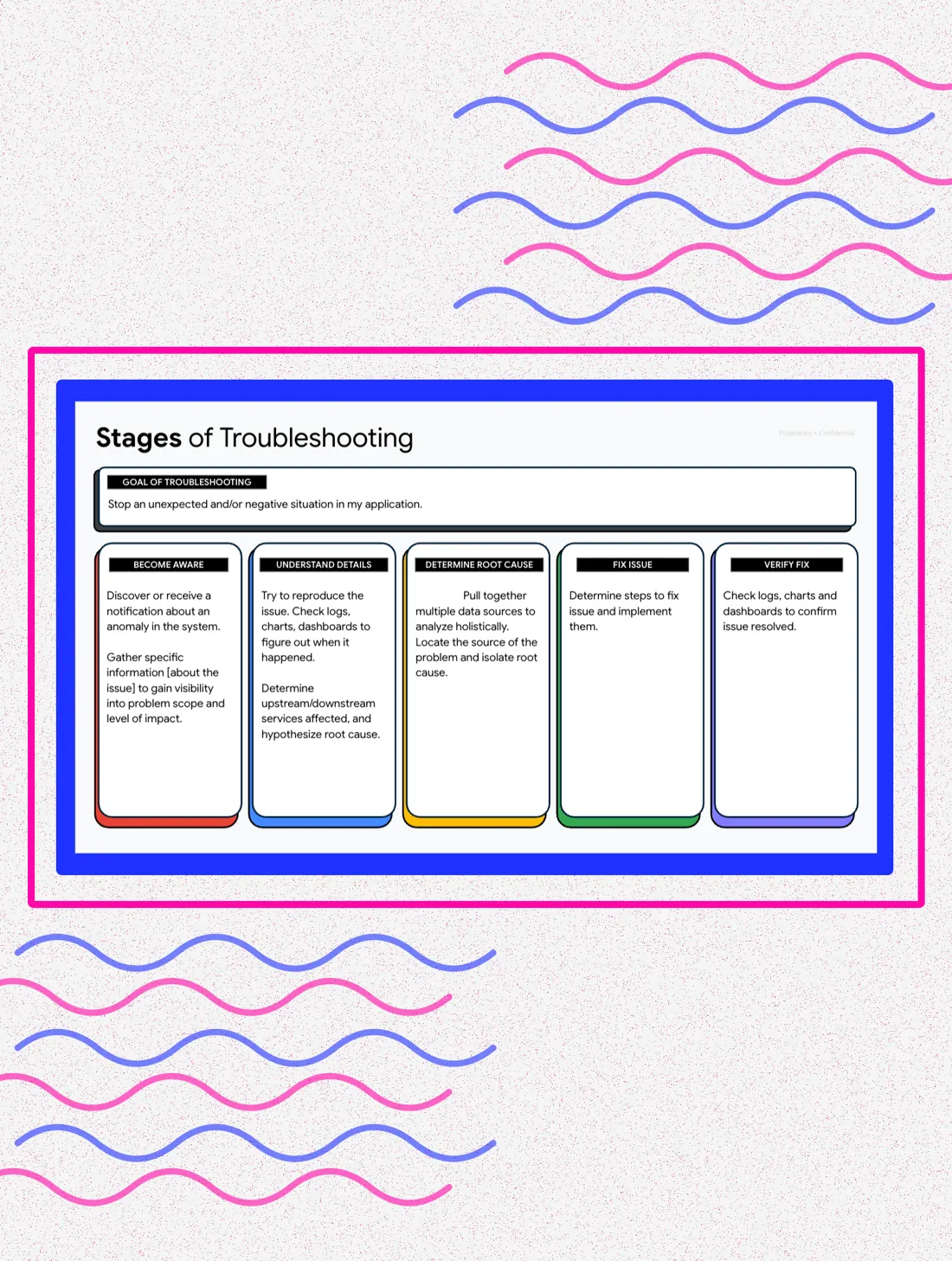
The team quickly agreed that troubleshooting was the core job we were underserving. Research showed five phases people move through when troubleshooting, each with unmet needs, and partners started brainstorming right away.
Troubleshooting Playbooks
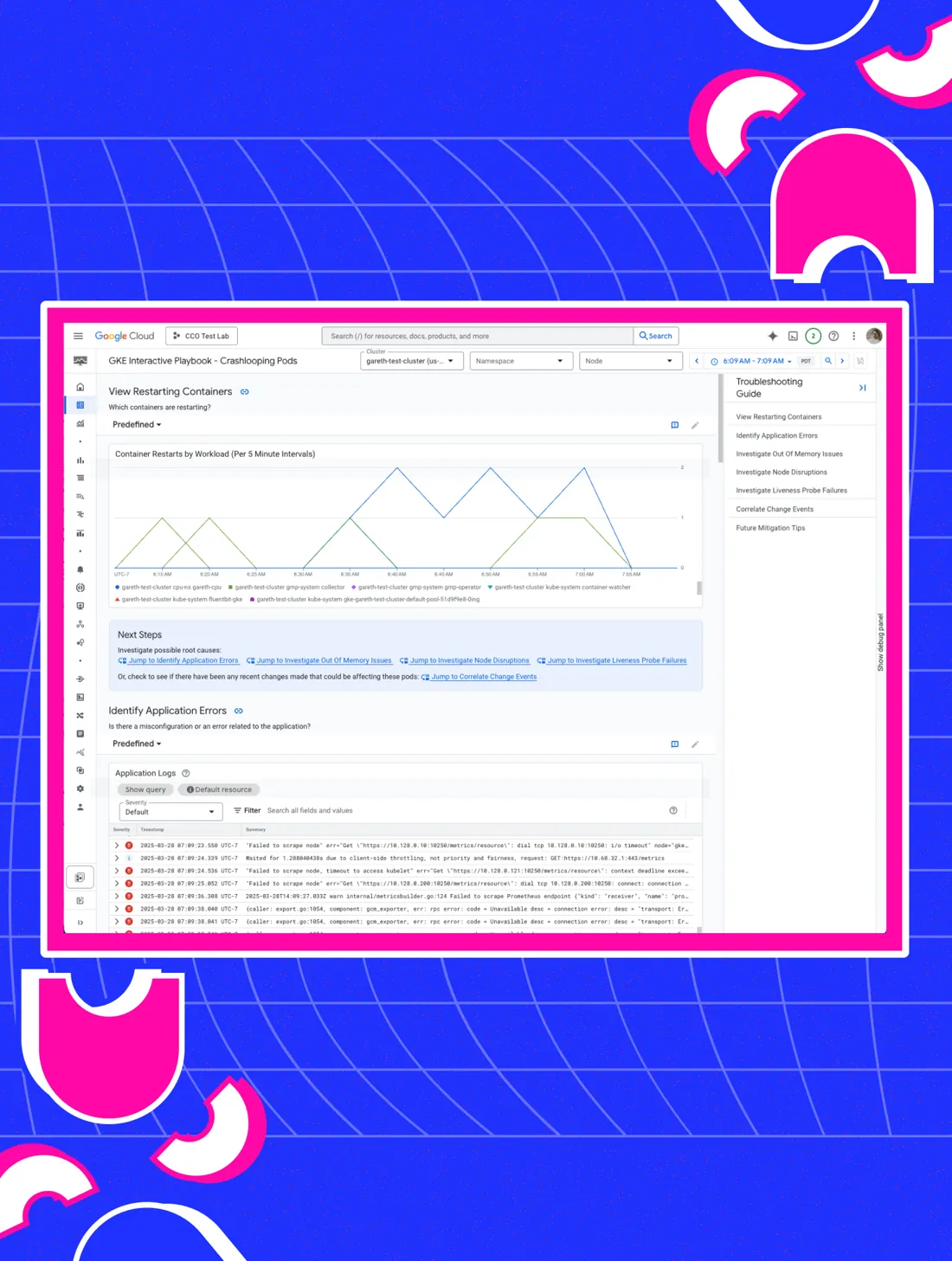
I worked with product managers and engineers on our first troubleshooting feature, Playbooks. We started with the “find the root cause and fix the issue” phase and, with the GKE team, picked the five most common issues users run into.
In context
Playbooks appear in the Kubernetes UI when a resource hits an error.
Guided
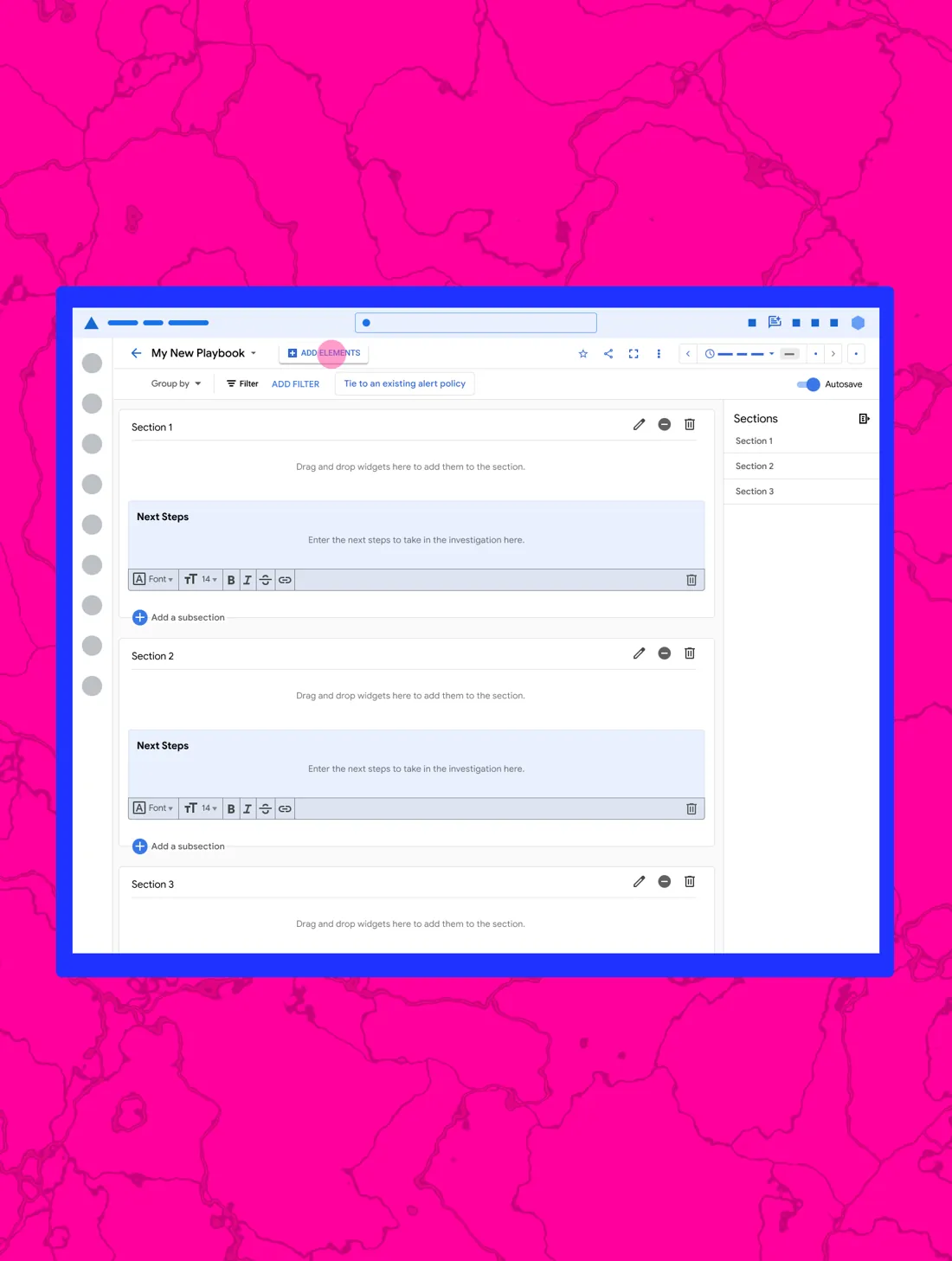
Each section ends with next steps based on that section’s data.
Preventive
Every playbook ends with tips for avoiding the issue next time.
Built to Scale
Customers loved the first five and wanted more. We couldn’t build one for every scenario, so we built playbooks on the Universal Dashboard Framework.
That let customers customize them. It also let our Technical Support Engineers publish playbooks for the issues they saw every day.
The key decision
Work through the feature backlog, or pause to re-anchor on user jobs?
The options
The roadmap was full of feature requests. We could keep working through them, or step back and find the job users most needed help with.
What we chose and why
A Jobs to be Done framework that made troubleshooting the shared focus, followed by playbooks for the five most common issues.
The trade-off
Starting with five issues left many scenarios uncovered. Building on UDF let customers and support engineers fill those gaps themselves.
Impact
People find playbooks right where problems happen and fix them without extra support. That work led directly to Gemini Cloud Assist Investigations.
fewer open support cases
playbooks published since launch
In the Wild
Learn more about Interactive Playbooks ↗ · Public coverage of this work.
What people are saying…
Thank you Ashley for recognizing and seizing the opportunity to get alignment across the Troubleshooting workstream. Your focus on anchoring to research and UX fundamentals has been very influential in getting the broader team to think about the challenges we need to address going forward.
Thank you for your partnership in helping create the GCE Interactive Playbooks for Compute. Your partnership enabled us to achieve five interactive playbooks for our customers in order to reduce cases and offer customers step-by-step guidance to independently troubleshoot and resolve common GCE issues.